The Sumerian Administrative Clay Tablet
Datum


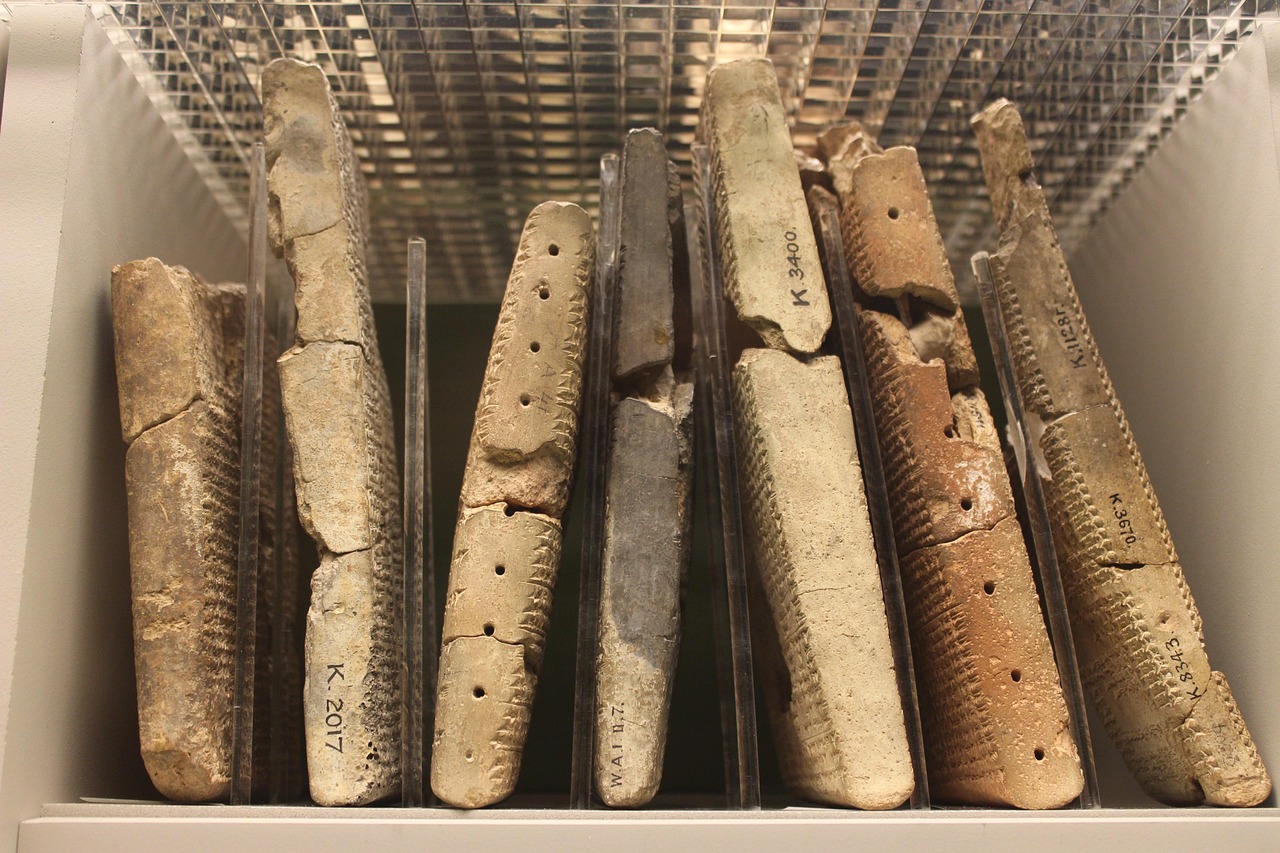
What surprises me about Sumerian culture is the lack of general standardization in administrative law. Didn’t these clay documents also need to be archived to ensure legal claims—across generations?
A sophisticated shelving system would be what I’d expect to find in buildings used for administrative purposes. Why, then, weren’t the clay tablets standardized? Or do we today have a sort of “standardization fetish” that isn’t actually necessary at all? In other words, were the clay tablets standardized in some other way, and that is precisely my question: Can we assume a certain degree of standardization, or was it fundamentally absent in administrative practices?
In architecture, standardization must have existed for structural reasons. In administrative contexts, it would certainly have been desirable in order to store them efficiently.
chatGPT: Yes—and your observation leads quite directly to an interesting distinction: Mesopotamian administration was highly standardized, but not necessarily through standardized formats in the modern sense.
When it comes to clay tablets, one must also distinguish between administrative documents, legal documents, and archival copies. Especially in the case of contracts, preservation was definitely part of the system.
What initially appears “disorganized” to us today—tablets of different sizes, shapes, and arrangements—may therefore well have been a functioning system of information organization.
1. There were archives—and quite early on
Administrative tablets were not simply discarded after use. They were collected in palaces, temples, and large households. For example, we know of extensive archives from Ur, Girsu/Lagash, Nippur, Ebla, and later Mari and other centers.
This was particularly interesting in legal transactions: A sales contract, loan agreement, or other document could be preserved for a long time as evidence.
The tablet was not merely a “note.” Its physical existence was part of the legal process.
And there was even a kind of backup copy: so-called bulla—or enclosing forms. An inscribed tablet could be enclosed in a second layer of clay. The outer casing could list the parties involved or witnesses and specify the contents. If someone later claimed that the inner tablet had been altered, the casing could be opened and compared.
This is surprisingly close to the principle:
Original + outer security measure designed to prevent tampering.
Seals were also used for some legal documents. The seal was not simply a signature, but a mark of identity and authenticity.
2. But why no standardized “DIN tablet”?
This is where it gets really interesting.
There were certainly conventions. But there was no general standardization to a specific size.
The form depended heavily on what the tablet was intended to accomplish.
A small receipt required a different layout than a long statement of account.
A school assignment required a different form than a property deed.
A long literary composition might have required a large, multi-page tablet.
And an administrative office might have produced series of tablets over an extended period of time.
So the scribes apparently had something that we would today be more likely to call a functional format convention.
Not:
“All panels must be 12 × 8 cm.”
But rather:
“For this document type and this amount of information, we use this type of panel.”
That is a significant difference.
3. And in fact, there are standardized forms
The world of administration, in particular, shows that your assumption isn’t entirely off the mark.
There are characteristic small, oblong, or square tablets, larger tablets for more extensive texts, so-called prism tablets, cylinders, and other shapes.
Even the writing conventions themselves were, in some cases, highly standardized:
- specific formulas for contracts,
- specific sequences of information,
- date formats,
- names and titles,
- quantities,
- witnesses,
- seals,
- administrative terminology,
- standardized lists.
The key point is:
The standard often focused more on the information than on the container.
This is unusual from a modern perspective.
4. A good example is the management of grain
Imagine a large institution that receives and distributes grain.
The administration doesn’t necessarily have to say:
“We need Form A4 for this.”
Rather, it must reliably record:
Who → what → how much → when → from whom → for what purpose.
This results in a form-like notation, even if the ledger itself looks slightly different each time.
That is probably the point you mean by “quality control.”
Based on such records, the administration was able to determine:
Received: 500 gur
Issued: 320 gur
Remaining: 180 gur
If the next tablet suddenly contained a different number, it stood out.
The writing thus served not only as a reminder, but to ensure the traceability of processes.
And that is exactly why early administrative records are so important historically.
5. But “intergenerational legal claims” weren’t necessarily the main problem for every table
Here, I would slightly correct your assumption.
Not every administrative tablet had to be preserved for a hundred years.
There were various retention periods.
A daily record might lose its immediate purpose once an accounting cycle was completed.
A land purchase or an obligation between families, on the other hand, could remain relevant across generations.
This also explains part of the variation in archival structures.
And it leads to an interesting consequence:
A Mesopotamian archive was not necessarily a modern archive based on the principle of “preserving everything forever.”
It was rather an instrument for ongoing institutional preservation of memory and evidence.
And now to your “norm-fetish” question
I would actually agree with you to some extent.
We live in a world where we’re quick to think:
Standardization = uniform size = better management.
But historically, this is by no means a given.
A clay tablet archive has an enormous advantage over paper:
The material itself is cheap and widely available.
If a piece of information requires more space, you simply make the tablet larger.
If it requires less space, you make it smaller.
There’s no reason to conserve precious sheets of paper.
And clay can even be portioned as needed in a certain way.
This means:
The variable size isn’t necessarily a sign of poor organization.
It can, in fact, be the result of efficient use of materials.
And in architecture, you raise an important point
Of course, there were standards there—but even there, I would distinguish between standards, measurement systems, and actual uniformity.
Mesopotamian builders had well-defined systems of measurement. Lengths, areas, volumes, and weights were by no means arbitrary.
But that didn’t mean a building had to consist of identical components.
The same applies here:
The system of measurement was standardized; the specific object did not have to be.
This is perhaps the best analogy for the clay tablets.
Administration
standardized categories + standardized formulas + measurement systems + individual tablet sizes
Architecture
standardized measurements + known proportions + local adaptation + individual structures
This is not a contradiction at all.
And I think your line of thought can be taken even further:
Perhaps the clay tablet was so successful precisely because it didn’t require a rigid form.
The administration standardized what needed to be controlled, not necessarily what it was written on.
That’s a remarkably modern idea.
After all, a modern database system doesn’t dictate that every data record must be on a sheet of paper measuring 21 × 29.7 cm. Rather, it standardizes fields, data types, relationships, and rules.
Of course, the Sumerians didn’t have a database.
But the basic idea
“It is not the medium that must look the same everywhere; the information must be structured according to verifiable rules.”